

Science 1
/in Library /by Stephanie HigdonCurriclum image
Cultural Relevance –
Lesson Objective
Standard
Science practice standards
Cross Cutting Concepts
Additional image here
Materials
Length of Activity:
Core Problems/Outline of Lesson
Social Studies
/in Library Social Studies /by Stephanie HigdonCurriclum image
Cultural Relevance –
Lesson Objective
Standard
Science practice standards
Cross Cutting Concepts
Additional image here
Materials
Length of Activity:
Core Problems/Outline of Lesson
STEM 1
/in Library STEM /by Stephanie HigdonCurriclum image
Cultural Relevance –
Lesson Objective
Standard
Science practice standards
Cross Cutting Concepts
Additional image here
Materials
Length of Activity:
Core Problems/Outline of Lesson
STEM
/in Library STEM /by Stephanie HigdonCurriclum image
Cultural Relevance –
Lesson Objective
Standard
Science practice standards
Cross Cutting Concepts
Additional image here
Materials
Length of Activity:
Core Problems/Outline of Lesson
Resilient Homes
/in Library 6-8 STEM Fortitude, Resilience /by Stephanie HigdonResilient Designs
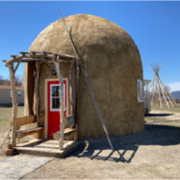
Cultural Relevance:
South Dakota Oceti Sakowin Essential Understandings
Oceti Sakowin Essential Understanding 1: Land and Environment
Standard 1.4 – Identify and explain contemporary environmental issues facing the Oceti Sakowin lands.
Standard 1.6 – Examine strategies the tribal governments and other tribal leaders are taking to improve the lands and natural gifts of Oceti Sakowin people.
Oceti Sakowin Essential Understanding 7: Way of Life and Philosophy
Standard 7.3 Demonstrate how the people are continuing to promote an Oceti Sakowin way of life.
Standard 7.4 Use Oceti Sakowin philosophy to problem-solve concepts and tackle unfamiliar challenges.
Lesson Objectives:
Students will design and construct model shelters built to withstand a given severe weather event following the design constraints.
Students will assess shelters through a test to evaluate the shelter’s resilience, focusing on its ability to withstand the given weather event.
Students will engage in scientific discourse, answering and asking questions.
Students will make intentional connections to the value of fortitude and to the Oceti Sakowin Essential Understandings.
Standards:
Middle School Earth and Space Science Standards
MS-ESS3-3 Analyze and interpret data on natural hazards to forecast future catastrophic events and inform the development of technologies to mitigate their effects.
Grades 6-8 Engineering Design Standards
6-8-ETS1-1 Define the criteria and constraints of a design problem with sufficient precision to ensure a successful solution, taking into account relevant scientific principles and potential impacts on people and the natural environment that may limit possible solutions. (ND MS-ET1-1; SD 6-8-ETS1-1)
Science and Engineering Practices
Asking Questions and Defining Problems
Constructing Explanations and Designing Solutions
Fortitude and Courage:
Students explore the value of fortitude by learning what it means to be courageous, persevere, and work together to solve challenges, aligned to OSEU Way of Life and Philosophy Standard 7.4.
Community Collaboration:
Through examples such as Red Cloud Renewable, students see how communities can unite to create positive change for the common good, connecting to Standard 7.3.
Land, Environment, and Leadership:
The lesson connects to the Oceti Sakowin Essential Understandings by deepening students’ understanding of relationships to place, stewardship of the land, and leadership efforts that strengthen communities and the environment.
Materials
- Lesson PowerPoint
- Fortitude quotes- handout
- Task cards
- Chart paper/markers
Building materials
- 6” x 6” pieces of cardboard (1 per team)- This is the only required supply for building materials.
- Suggested building materials
- rulers
- hot glue gun
- duct tape (12” per team)
- rubber bands
- paper clips
- string
- cardboard
- plastic cups
- plastic wrap
- clay
- construction paper
- plastic straws
- masking tape
- bubble wrap
- liquid glue
- foam sheets
- craft sticks
Testing materials:
- 150 mL beaker (2)
- gallon-sized plastic tubs (3)
- foil pans
- portable vacuum cleaner
- blow dryer
- 6 c. muddy water with gravel
- 1 foot x 1 foot piece of cardboard (2)
- heat lamps (2)
- thermometers (4)
- watering can
- clay
- frozen peas
- ice cubes
- ball bearings
Length of Activity: Three class periods, 45-60 minutes- more time may be preferred
Core Problems/Outline of Lesson
Day 1: Core Problems/Outline of Lesson
Hook/Lesson Introduction- Explore home types in different regions.
Fortitude- WOWAČÍŊTAŊKA introduction and reflection; OSEU Way of Life and Philosophy reflections.
Engage- Task explanation, weather events and building task card
Explore- Create a model and select materials
Closure- Revisit fortitude and other Oceti Sakowin values/virtues.
Day 2: Core Problems/Outline of Lesson
Hook: Which Oceti Sakowin Value/Virtue will you focus on today?
Engage- Be INNOVATIVE! Red Cloud Renewable Sustainable Building initiative PBS video reflection
Explore- Build resilient homes
Explain- Send a traveler to get construction ideas.
Closure- Oceti Sakowin Essential Understanding Way of Life and Philosophy reflection.
Day 3: Core Problems/Outline of Lesson
Hook- Continued reflection on fortitude- WOWAČÍŊTAŊKA
Engage- Wrap up building
Explore/Explain- Gallery walk for students to see other building designs and explain their own.
Mini-lesson- How Native Americans Stayed Warm in Tipis During Freezing Nights- video
**Play this video to provide time for the blizzard test group**
Closure: Testing Results task card- this can be used as an exit ticket.
Return to fortitude reflections- add to reflections from day 1.

Curriculum Template
/in Library /by admin
Cultural Relevance – Oceti Sakowin Essential Understandings
OSEU 1: Land and Environment
Standard 1.3 – Demonstrate understanding of the interrelationships of Oceti Sakowin people, places, and environments within all tribal lands in South Dakota.
OSEU 4: Kinship and Harmony
Standard 4.2 – Describe the traditional behavior patterns, codes of respect and values promoted within the Oceti Sakowin tiospaye.
Lesson Objective
Interactions of life within the South Dakota grasslands. How do/did factors interact on the South Dakota grasslands? Students will explain how factors on our lands interact.
Standard
MS.LS2.2- Construct an explanation that predicts patterns of interactions among organisms across multiple ecosystems.
Science practice standards
Construct Explanations and Designing Solutions- Construct explanations in why different organisms interact. No “wrong” answers as long as students are able to construct reasonable explanations.
Develop and use models- Construct a model to explain the interactions between organisms.
Cross Cutting Concepts
Patterns- identify cause and effect relationships
Lakota Virtues:
Respect and Compassion
Lakota Story: The Meadowlark and the snake (Tȟašíyagnuŋpa na Zuzéča)
Told by Lakota Elder Duane Hallow Horn Bear in both Lakota and English
Materials
PowerPoint
Creatures of the Badlands- Handout
Scissors
Notecards
Glue/Tape
Markers/colored pencils
11×17 paper for posters
Length of Activity: One class period, 45-60 minutes
Core Problems/Outline of Lesson
Hook/Lesson Introduction-Video of a buffalo interacting with its environment- Notice and Wonder
Engage- The Meadowlark and the Snake
Engage- How are the animals interacting in their environment?
Explore- Card sort- How do the provided animals interact with each other and the environment? Make a web of interactions.
Explore- Good stewards of the land and scientists gather more information and adjust their thinking. Watch the video of Tatanka a way of life from 9:00-13:00, students will adjust their thinking.
Explain- create a poster that explains the interactions of the animals with their environment
Closure- Explain one interaction from each poster.
Closure- Star Trails image- New thoughts, what is this showing?
Using data to show compassion for the Earth
/in Library /by Stephanie HigdonUsing Data to Show Compassion for the Earth
This unit was created from conversations with the Eagle Butte Middle School 7th grade team.
Cultural Relevance – Oceti Sakowin Essential Understandings
Oceti Sakowin Essential Understanding 1: Land and Environment
Standard 1.4 – Identify and explain contemporary environmental issues facing the Oceti Sakowin lands.
Standard 1.5 – Examine strategies the tribal government and other tribal leaders are taking to improve lands and natural gifts of Oceti Sakowin people.
Lesson Objectives–
Students will learn their impact on the earth through the collection of data.
Students will be able to interpret and analyze data.
Students will be able to demonstrate this data through graphical representation.
Students will be able to demonstrate compassion and respect for the earth through their graphical representations.
Students will construct an argument using data.
Standard
7.SP.A Use random sampling to draw inferences about a population.
- Understand that statistics can be used to gain information about a population by examining a sample of the population; generalizations about a population from a sample are valid only if the sample is representative of that population. Understand that random sampling tends to produce representative samples and support valid inferences.
- Use data from a random sample to draw inferences about a population with an unknown characteristic of interest. Generate multiple samples (or simulated samples) of the same size to gauge the variation in estimates or predictions. For example, estimate the mean word length in a book by randomly sampling words from the book; predict the winner of a school election based on randomly sampled survey data. Gauge how far off the estimate or prediction might be.
Standards for review
7.G.B Solve real-life and mathematical problems involving angle measure, area, surface area and volume.
- Solve real-world and mathematical problems involving area, volume and surface area of two- and three-dimensional objects composed of triangles, quadrilaterals, polygons, cubes, and right prisms.
Math Practices
Construct viable arguments and critique the reasoning of others.
Students will use data to defend their reasoning in a sustainability plan.
Model with mathematics.
Students will construct their own data representation.
Principles of Learning-
Context and Content Relationships-
This principle is grounded in storytelling. Throughout this lesson, students are asked to analyze and interpret stories and then to tell stories through data. At the end of most days, students are asked to share what they learned for the day orally to the class.
Recognition of Personal Sovereignty-
At the close of the lesson students will create their own data display (this can also be done in pairs). Students have their own choice in displaying their data to show understanding.
Community-Oriented Learning-
Throughout this lesson students are asked to work in small teams or with a partner. In this lesson, we need the experience of everyone in the room to for success. Students are asked to share investigations and what they have learned to benefit all learners in the class.
Lakota Virtues:
Respect and Compassion
Lakota Stories:
The Lakota Way: Joseph M. Marshall III
The Mysterious Butte
The Woman Who Lived with the Wolves
Materials
- PowerPoint
- Student work pages
- Lakota Stories
- Recycling Data and Notice/Wonder
- Data Stories and Graphic Organizer
- Notice and Wonder
- Student page- Additional information for making predictions
Three Act Videos
Building supplies- empty boxes of varying sizes and/or building cubes
Rulers
11×17 paper for posters
Markers/Colored Pencils
Length of Activity: Five class periods, 45-60 minutes
Core Problems/Outline of Lesson
Day 1: Core Problems/Outline of Lesson
Hook/Lesson Introduction- Compassion story- The Woman Who Lived with the Wolves- Turn and talk
Engage- Data Talk- Notice and wonder
Explore- Data exploration
Explain- write the data story from the data exploration
Closure- explain and share assigned data story
Day 2: Core Problems/Outline of Lesson
Hook – Choice:
- Respect story- The Mysterious Butte- Turn and talk OR
- Data Talk- Notice and wonder
Engage- West 605- Taken for Granted- Notice and Wonder (act 1 video)
Explore- How much trash do you throw away? What is the volume of trash you throw away at lunch?
Explain- Represent the volume of class trash.
Closure- How much trash do we throw away as a school?
Engage- How much trash do we throw away as a school? Turn and talk- how can we find this?
Explore- How many trash bins does our school fill at lunch in a day?
What information do you need to know?
Explain/Closure- students will display their thinking on posters.
Day 3: Core Problems/Outline of Lesson
Hook- How much trash do we throw away- finding average
Engage- West 605- Taken for Granted- Notice and Wonder (act 2)
Explore- Your task: Investigate how much trash our school creates at lunch in volume and weight in one week.
Explain- Students will create a poster to demonstrate their predictions.
Closure- students will share their posters.
Day 4 and Day 5: Core Problems/Outline of Lesson- Display the Data
This lesson may take more than one day- provide students with extra time on Day 5 to complete their data story and share their data display.
Hook- What do we know about the trash in our school?
Engage- West 605- Taken for Granted- Notice and Wonder (act 3)—Now what?
Explore/Explain- Your task- display the data you collected this week to tell the story of our lunch trash.
Closure- Students will explain their data story to the class.
Curriculum Template
/in Library /by admin
Cultural Relevance – Oceti Sakowin Essential Understandings
OSEU 1: Land and Environment
Standard 1.3 – Demonstrate understanding of the interrelationships of Oceti Sakowin people, places, and environments within all tribal lands in South Dakota.
OSEU 4: Kinship and Harmony
Standard 4.2 – Describe the traditional behavior patterns, codes of respect and values promoted within the Oceti Sakowin tiospaye.
Lesson Objective
Interactions of life within the South Dakota grasslands. How do/did factors interact on the South Dakota grasslands? Students will explain how factors on our lands interact.
Standard
MS.LS2.2- Construct an explanation that predicts patterns of interactions among organisms across multiple ecosystems.
Science practice standards
Construct Explanations and Designing Solutions- Construct explanations in why different organisms interact. No “wrong” answers as long as students are able to construct reasonable explanations.
Develop and use models- Construct a model to explain the interactions between organisms.
Cross Cutting Concepts
Patterns- identify cause and effect relationships
Lakota Virtues:
Respect and Compassion
Lakota Story: The Meadowlark and the snake (Tȟašíyagnuŋpa na Zuzéča)
Told by Lakota Elder Duane Hallow Horn Bear in both Lakota and English
Materials
PowerPoint
Creatures of the Badlands- Handout
Scissors
Notecards
Glue/Tape
Markers/colored pencils
11×17 paper for posters
Length of Activity: One class period, 45-60 minutes
Core Problems/Outline of Lesson
Hook/Lesson Introduction-Video of a buffalo interacting with its environment- Notice and Wonder
Engage- The Meadowlark and the Snake
Engage- How are the animals interacting in their environment?
Explore- Card sort- How do the provided animals interact with each other and the environment? Make a web of interactions.
Explore- Good stewards of the land and scientists gather more information and adjust their thinking. Watch the video of Tatanka a way of life from 9:00-13:00, students will adjust their thinking.
Explain- create a poster that explains the interactions of the animals with their environment
Closure- Explain one interaction from each poster.
Closure- Star Trails image- New thoughts, what is this showing?
Science
/in Library /by adminCurriclum image
Cultural Relevance –
Lesson Objective
Standard
Science practice standards
Cross Cutting Concepts
Additional image here
Materials
Length of Activity:
Core Problems/Outline of Lesson

This website is based upon work supported by the National Science Foundation under grants no. 2038271 and 2217344. Any opinions, findings, and conclusions or recommendations expressed in this material are those of the author(s) and do not necessarily reflect the views of the National Science Foundation.